
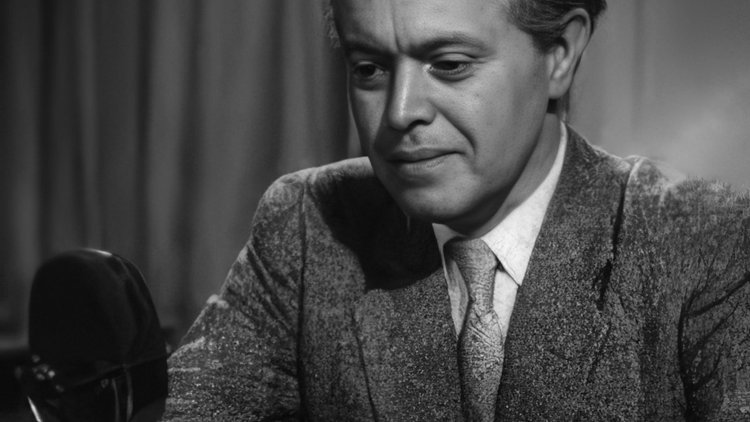
William Robert “Bertie” Rodgers (1909–1969) was a multi-talented home-grown literary figure – poet, essayist, radio broadcaster, scriptwriter, lecturer, reviewer, and former Presbyterian minister.
Born in Belfast and raised in a strict Presbyterian household in Mountpottinger, just a few hundred yards from where you’re standing now, he developed an early love of reading and writing, going on to study English at Queen’s University Belfast, before training for the ministry at the Presbyterian Theological College. In 1935 he was ordained and installed as minister of Loughgall Presbyterian Church in Co. Armagh, a community he served for over twelve years, and which later inspired much of his writing.
Rodgers married Dr. Marie Harden Waddell in 1936, with whom he had two daughters, Harden and Nini. During his Loughgall years he began writing poetry, encouraged by literary contemporaries such as John Hewitt and Louis MacNeice. His first major collection, Awake! and Other Poems (1941), received critical acclaim despite most copies being destroyed in the Blitz. Personal pressures – including his wife’s severe illness and his own tension between private creativity and public ministry – contributed to his resignation from the church in 1946.
Recruited by Louis MacNeice, Rodgers joined the BBC’s new Third Programme as a scriptwriter and producer. His innovative radio work included the influential series Irish Literary Portraits, later published posthumously. During the 1940s and 1950s he was active in Ulster’s Regionalist literary movement and collaborated with MacNeice on The Character of Ireland. Elected to the Irish Academy of Letters in 1951, he later served on arts bodies throughout the United Kingdom.
After the death of his first wife, Rodgers married Marianne Helweg in 1953. He continued freelance work and later taught in the United States, becoming writer-in-residence at Pitzer College, Claremont, California, in 1966. Awarded an Irish Arts Council annuity in 1968, he died in Los Angeles in 1969 and was buried in Loughgall.
Celebrated for his rich language and lyrical power, Rodgers remains an important figure in Irish literary and broadcasting history.