
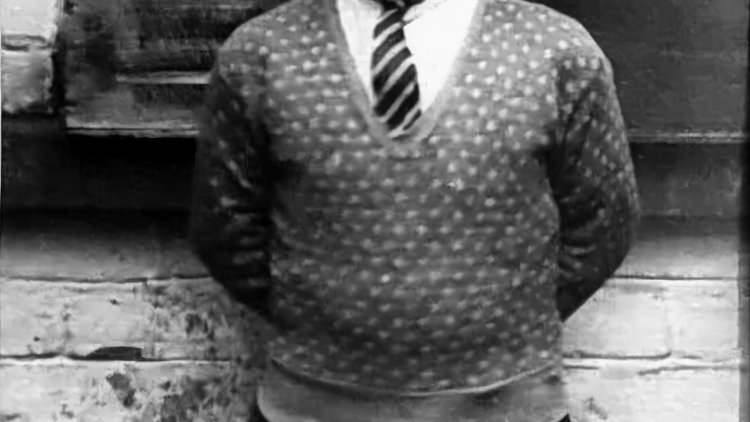
A.R.P. Messenger Phares Hill Welsh was tragically killed during the Belfast Blitz on 16 April 1941 at the age of 16. His death at such a young age has become emblematic of the heavy toll suffered by Belfast citizens during Luftwaffe bombing raids in WW2.
Phares lived with his parents in 28 Paxton Street at the time of the attack. His Father, Phares Hill MM, had served during the First World War, enlisting in the 8th Battalion East Belfast Royal Irish Rifles before being transferred to the Royal Engineers. He was awarded the Military Medal for action at Ypres.
By 1941 Belfast was making a significant contribution to the British war effort. 260 vessels were built in the shipyard during the war – 10% of the UK’s merchant shipping. Tanks, guns and aircraft, including 1500 heavy bombers were also manufactured in the city, all of which made it a target for Germany’s Luftwaffe. 180 planes bombarded Belfast on the night of 15th/16th April 1941. Thorndyke Street, where the young Phares was killed, was a peaceful residential area, near the Harland and Wolff Shipyard. The Luftwaffe bombed the industrial area, causing errant bombs to fall on nearby residential streets and Thorndyke Street suffered particularly heavy losses. A 250lb bomb exploded near a public air raid shelter, the blast causing its reinforced concrete roof to collapse, killing 14 people sheltering inside, Phares among them. His death remains a devastating reminder of the civilian toll during World War II, particularly in communities like Thorndyke Street, which were forever changed by the events of the Belfast Blitz.
Phares is buried in Dundonald Cemetery.