
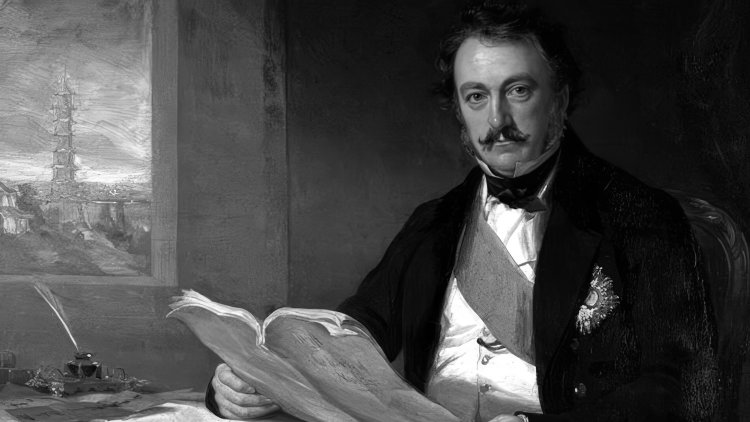
Henry Pottinger was born at his family’s estate, Mount Pottinger, in what was then known as Ballymacarrett, but is now an area in the east of Belfast that includes Westbourne Church and the city’s shipyards. Henry was a pupil of Belfast Academy until 1803, when aged 14 he was sent to India, joining the East India Company’s military service as a cadet, the following year. In 1809 he was promoted to lieutenant and served in the Third Anglo-Maratha War.
He returned to England in 1839 and was made a baronet but was off travelling again in 1841 when he accepted the post of envoy and superintendent of British trade in China. Lord Palmerston, the British Foreign Secretary also instructed him to evaluate the island of Hong Kong, rating its value as a defensible port for ‘ships of war and commerce.’
Henry joined the British forces in northern China, helping to negotiate the Treaty of Nanking in 1842 that ended the First Opium War and gave Hong Kong Island to the British. Henry became its first Governor in 1843.
Henry returned to Britain in 1844, becoming a member of the Privy Council, advising Queen Victoria on matters of absolute authority and privilege. He served as Governor of the Cape Colony in 1847, Governor of Madras from 1848-1854 and died peacefully in retirement on the island of Malta on 18th March 1856. Henry’s life of adventure and service is remembered with the naming of Pottinger’s Entry in Belfast and Pottinger House at Belfast Royal Academy, but it is in Hong Kong where his name is commemorated most with Pottinger Street, Pottinger Peak, Pottinger Gap and Pottinger Battery all celebrating one of East Belfast’s most significant sons.