
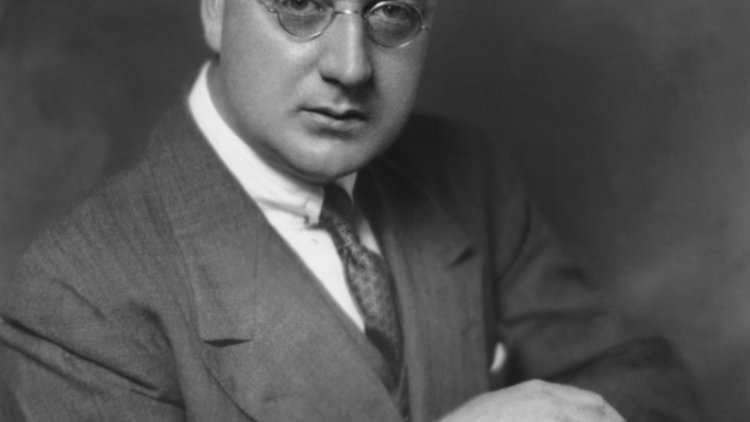
St John Greer Ervine was a major Ulster dramatist, novelist, biographer, critic and theatre manager. Widely regarded as one of Northern Ireland’s leading writers of the early Twentieth Century, his work influenced W.B Yeats and Sean O’Casey. Born John Greer Irvine just a short walk from here, to a deaf mother and a printer father who died shortly after his birth, he was raised by his grandmother.
Leaving Westbourne National School at fourteen, he worked as an insurance clerk before moving to London in 1901, where poverty shaped his early socialism and brought him into the Fabian circle of George Bernard Shaw, who would become his mentor.
Adopting the more theatrical name “St John Ervine,” he began writing journalism and plays, including Mixed Marriage (1911) and John Ferguson (1915) for the Abbey Theatre in Dublin. He also wrote Ibsen-influenced critiques of Belfast sectarianism and northern Protestant culture. As Abbey manager he revived its finances but alienated actors, and his opposition to the 1916 Easter Rebellion deepened conflict in his professional and personal life. Forced to resign, he enlisted in the British Army, becoming a Lieutenant in the Royal Dublin Fusiliers, losing a leg in Flanders in 1918 and his experience hardened his belief in the Allied cause and contributed to his eventual shift from home rule advocacy to a strong unionist outlook.
Between the 1920s and 1930s he wrote commercially successful West End comedies, most notably Anthony and Anna and The First Mrs. Fraser, while also serving as a critic for The Observer. Ervine also wrote popular novels, including The Wayward Man (1927), and acclaimed biographies of figures such as Carson, Craigavon, General Booth, Oscar Wilde and most notably, George Bernard Shaw—whose biography earned the 1956 James Tait Black Prize. A combative and often controversial cultural voice, Ervine mixed literary achievement with sharp conservative commentary and an enduring commitment to life in Northern Ireland.