
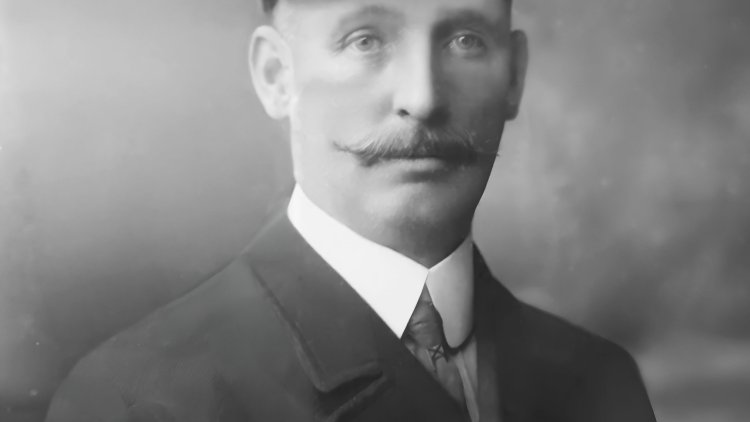
William Hume was an Irish cyclist whose achievements played a crucial role in proving the revolutionary value of John Boyd Dunlop’s pneumatic bicycle tyres. In March 1889, when he was captain of the Belfast Cruisers Cycling Club, Hume became the first member of the public to purchase a bicycle fitted with Dunlop’s invention. At the time, most cyclists used narrow, solid rubber tyres and viewed the soft, air-filled alternative with ridicule—believing they would burst easily, could not be repaired roadside, and would make cycling feel like riding uphill.
Encouraged by Dunlop to demonstrate their effectiveness, Hume entered four races at the Queen’s College Sports in Belfast on 18 May 1889. Riding a Dunlop racer, he won all four events, becoming the first cyclist in the world to taste victory riding on Dunlop’s tyres. His victories stunned critics and proved the immense advantages of the radical invention. Among the spectators was entrepreneur and politician Harvey du Cros, who immediately recognised its commercial potential. Within six months he acquired the rights to Dunlop’s patent for £3,000 and established the Pneumatic Tyre Company, which later became central to modern tyre manufacturing.
Hume introduced the pneumatic tyres to England in 1889, winning nearly all the events he entered in Liverpool. His accomplishments were honoured in 1938 when Cycling Weekly included William in its Golden Book of Cycling.
Though Hume died in 1941 largely forgotten outside cycling history, his early adoption and public demonstration of pneumatic tyres helped transform cycling and motoring worldwide. His willingness to defy sceptics ensured the rapid demise of solid tyres and paved the way for modern bicycle and automotive design.